The Economics of Meal Planning: How Planning Your Weekly Menu Can Save You Thousands Every Year
The Economics of Meal Planning: How Planning Your Weekly Menu Can Save You Thousands Every Year
Blog Article
he Economics of Meal Planning: How Planning Your Weekly Menu Can Save You Thousands Every Year
Between grocery store inflation and the convenience of food delivery, keeping household food expenses under control can feel like an uphill battle. Most people assume that cutting their food budget requires sacrificing flavor, living on instant noodles, or spending weekends prepping tedious meals. However, the real secret to slashing your kitchen expenses isn't eating less—it is planning smarter.
Meal planning is often framed as a health habit, but at its core, it is one of the most effective personal finance strategies available. Managing your kitchen with a clear system eliminates the daily friction that leads to impulse buying, spoiled produce, and late-night takeout orders. Understanding the financial impact of how you buy and prepare food reveals how a structured weekly meal plan can put thousands of dollars back into your copyright each year.
## The Hidden Drain: Food Waste and Takeout Statistics
To understand why meal planning saves money, examine where unorganized kitchen spending actually goes. Financial leakage in the average household budget typically stems from two main sources: uneaten food that ends up in the trash and spontaneous spending on food delivery.
According to data from the United States Department of Agriculture (USDA), click here the average American family of four throws away approximately $1,500 to $1,800 worth of uneaten food every year. That represents nearly 30% to 40% of all purchased groceries. Fresh produce, herbs, dairy, and meats are the most common casualties. Buying groceries without a concrete plan for each ingredient leaves surplus items in the back of the refrigerator until they spoil.
At the same time, dining out has become a massive expense. The Bureau of Labor Statistics reports that the average household spends over $3,500 annually on restaurants and delivery services. A single takeout order for two easily exceeds $40 once service fees, delivery tips, and markups are added. Choosing delivery just twice a week costs upward of $4,000 annually. Most of these purchases are not planned treats; they are reactive decisions made at 6:00 PM when fatigue sets in and nobody knows what to make for dinner.
## How Structured Meal Planning Cuts Your Grocery Bill
The most immediate financial benefit of weekly meal planning is a drastically lower grocery bill. Shopping without a meal plan leaves you vulnerable to retail marketing designed to encourage impulse buys and unnecessary end-cap items.
A structured meal planning system grounds your shopping in reality. When you map out your meals for the coming week, you know precisely which ingredients—and exact quantities—you need. Effective meal planning also begins with auditing what you already own. Checking your pantry, fridge, freezer, and spice rack before building your list prevents buying duplicate items that are already sitting on your shelves.
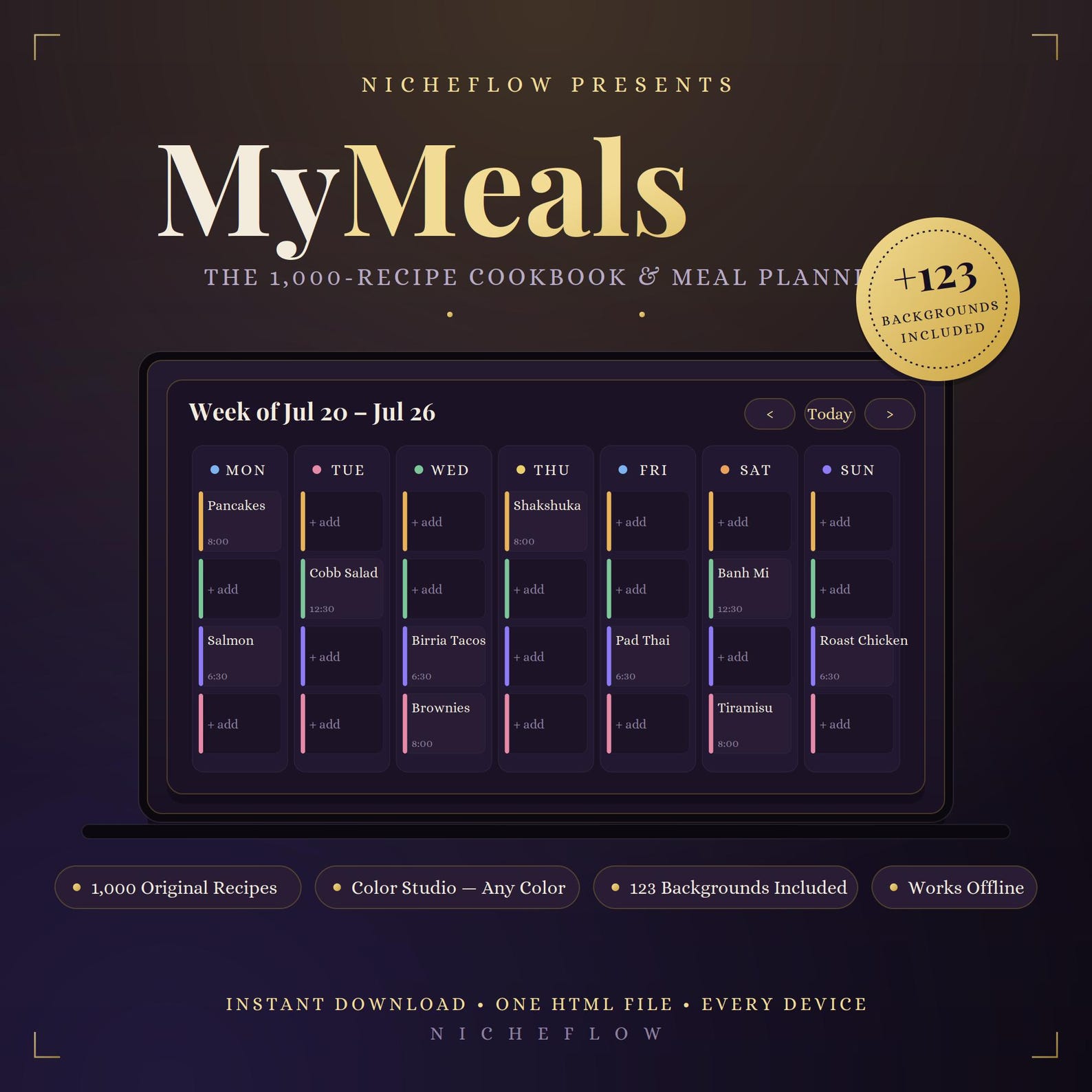
Modern digital tools streamline this process. Using a flexible [digital cookbook and meal planner](https://nicheflow.etsy.com/listing/4543735784) allows you to select your meals for the week and automatically compile an organized grocery list directly from those recipes. An auto-generated list ensures you only buy what you will actually consume, eliminating impulse purchases and preventing fresh food waste. Eliminating impulse buys alone can reduce your monthly grocery expenses by 20% to 30%.
## The Recipe Variety Secret: Ending Takeout Cravings at Home
A primary reason people abandon traditional meal planning is food boredom. Eating the same batch of baked chicken and steamed broccoli four days in a row leads directly to burnout. By Thursday evening, the temptation to open a delivery app becomes irresistible, erasing earlier savings.
The key to consistency is variety without complexity. Having access to a wide range of quick, delicious recipes keeps home cooking enjoyable rather than stressful. Whether you need a 15-minute weeknight dinner, a hearty breakfast, or a light lunch, having clear options eliminates decision fatigue.
Organizing your weekly menu with a tool like the [NicheFlow meal planner](https://nicheflow.etsy.com/listing/4543735784) gives you instant access to a vast recipe library that keeps mealtime fresh. When you can search through hundreds of curated dishes by category or ingredient, replicating restaurant-quality flavors at home becomes effortless and affordable. When home-cooked meals taste great and require minimal prep guesswork, ordering expensive takeout shifts from a default habit into a rare, intentional treat.
## Building a Sustainable $100+ Weekly Savings Routine
Establishing a successful meal planning habit does not require complicated spreadsheets or pricey recurring app subscriptions. Keeping the process simple, lightweight, and accessible offline ensures you stick with it long-term. Here is a practical workflow to build a sustainable weekly routine:
1. **Audit Your Kitchen Inventory:** Spend five minutes reviewing your pantry, fridge, freezer, and spices. Note ingredients that need to be used soon.
2. **Select Your Weekly Meals:** Choose your breakfast, lunch, dinner, and dessert options for the week. Having access to a complete [1000 recipe cookbook](https://nicheflow.etsy.com/listing/4543735784) makes it easy to choose meals that share perishable ingredients like fresh herbs or greens, reducing waste even further.
3. **Sync with Your Schedule:** Assign chosen meals to specific days on your weekly calendar. Syncing your meal plan with your Google or Apple Calendar aligns your cooking times with work schedules and busy evenings.
4. **Generate Your Grocery List:** Consolidate required ingredients into a single shopping list, checking off items you already own. Stick strictly to this list when shopping.
5. **Track Your Progress:** Monitor daily habits like food logging and hydration. Staying hydrated and well-nourished maintains energy levels, making you far less prone to emergency takeout spending.
Following this simple weekly rhythm enables most households to save between $75 and $150 per week on groceries and dining out. Over a full year, that adds up to more than $4,000 in direct savings.
---
### Take Control of Your Kitchen and Budget Today
If you are ready to eliminate food waste, stop overspending on groceries, and simplify daily meal decisions, having the right companion tool makes all the difference. The MyMeals planner provides an all-in-one solution featuring 1,000 original recipes (250 breakfasts, 250 lunches, 250 dinners, and 250 desserts across 39 subcategories), an interactive weekly planner, automatic grocery lists, kitchen inventory tracking, a 12-glass hydration tracker, and 4 designer themes.
Unlike subscription apps charging recurring fees, MyMeals is a single HTML file that opens instantly in any browser on any device. It works 100% offline, requires no app or account, and costs a one-time fee of $16.99. If you want to transform your cooking routine while saving thousands on food, [check this out](https://nicheflow.etsy.com/listing/4543735784) on Etsy today!
 Report this page